bake

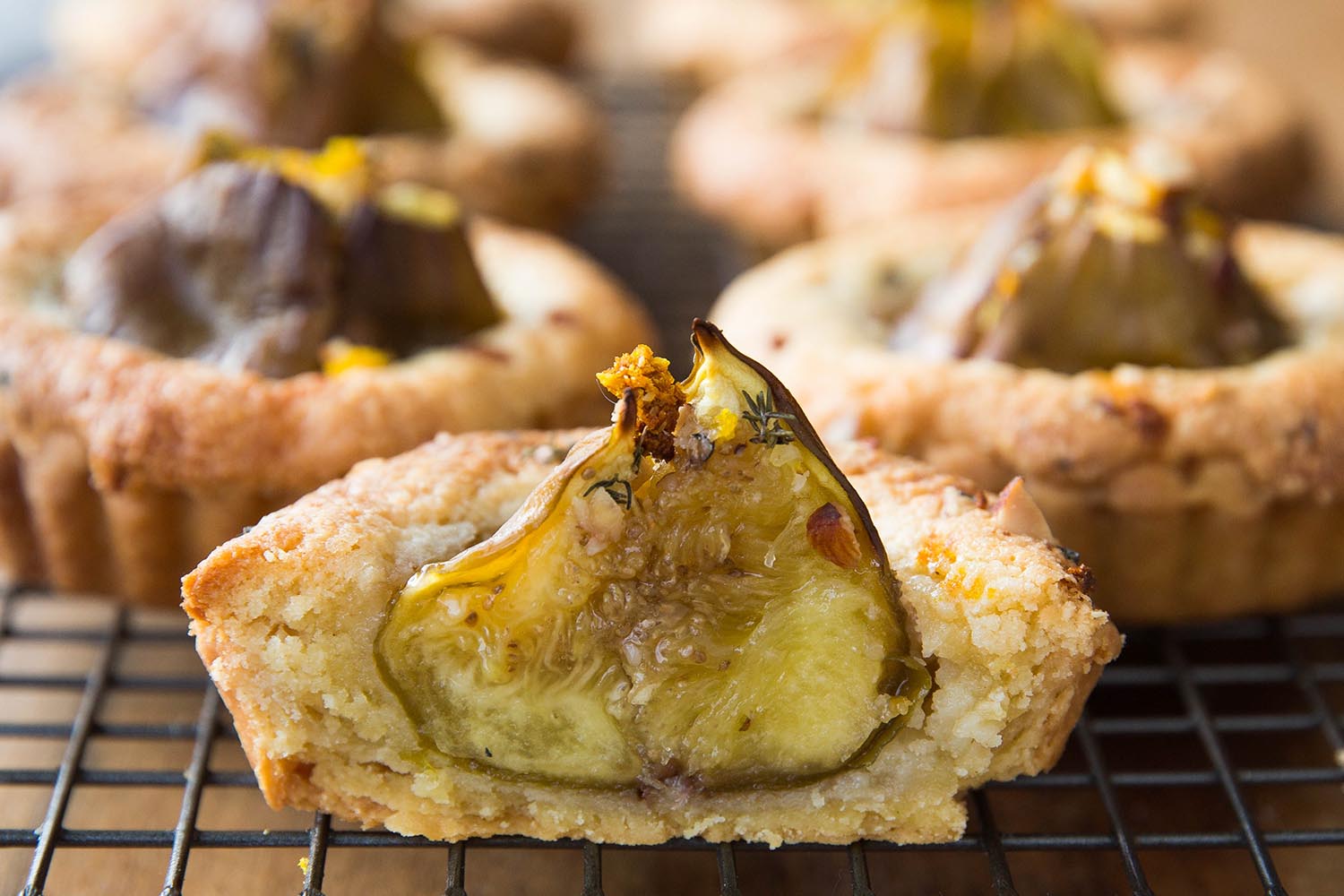
Fig Tarts

I recently found these beautiful plump figs at the local food market. It's called the Oranjezicht City Farm and it is in Granger Bay. The market is centered on fresh produce from your local farmer that is grown organically and ethically. I make a concerted effort to buy only organic and free range products for my household.

Organic food is something that in recent years has become quite prominent in my life. I feel there has been an awakening within me to know what I’m putting into my body and where it comes from. The food industry is a multi-billion-dollar corporation and the facts are that health and wellness are sacrificed in mass production. I have to ask, how often do you check where your eggs come from and how your beef found its way onto your plate? These are questions we need to ask ourselves. For instance, there are no long-term studies on how the hormones in our milk affect us and our children. Now don't get me wrong, I am not preaching veganism. I'm not even preaching vegetarianism. I am simply saying that arming yourself and your family with knowledge about what we eat will create a healthier life for you and the animals out there.

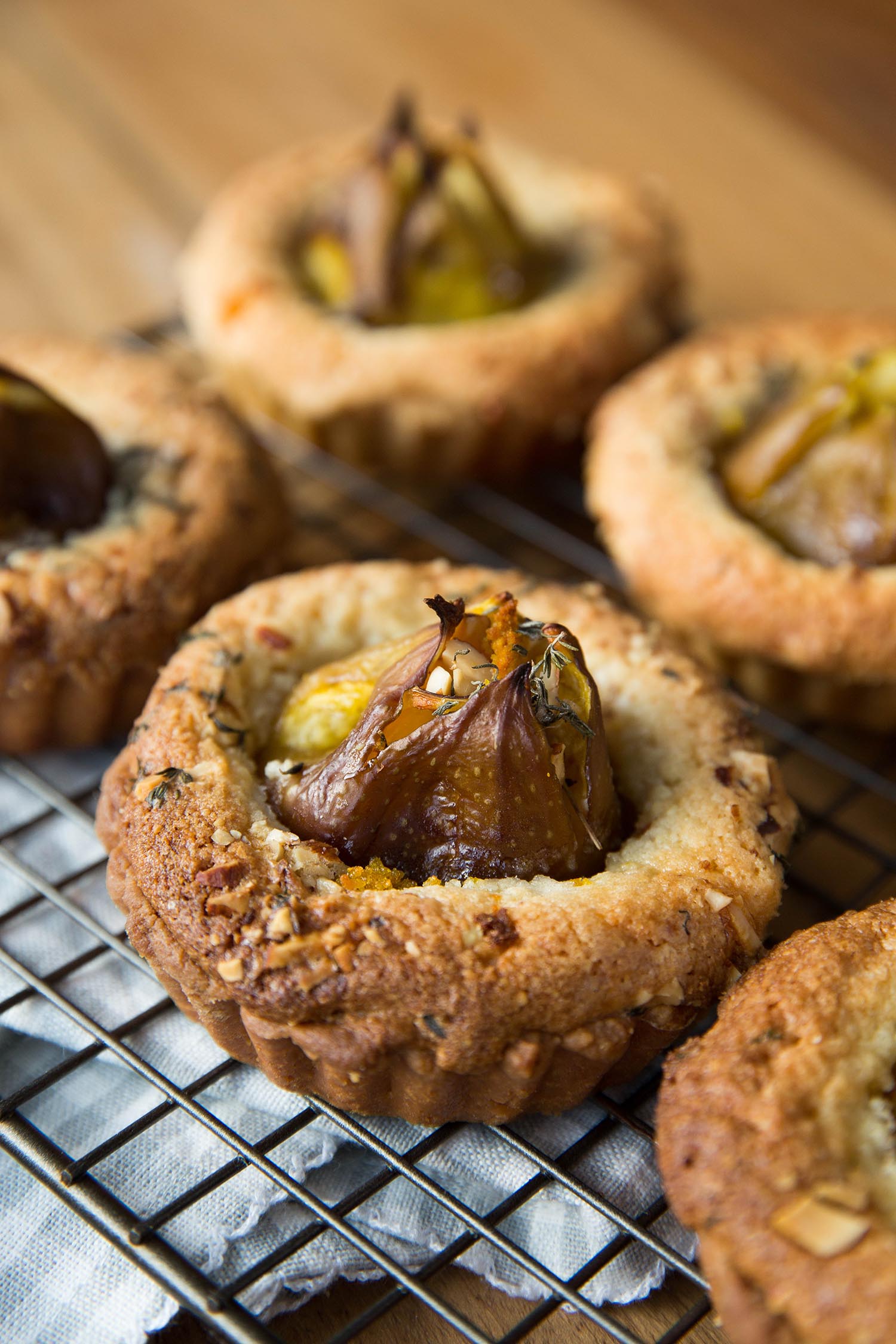
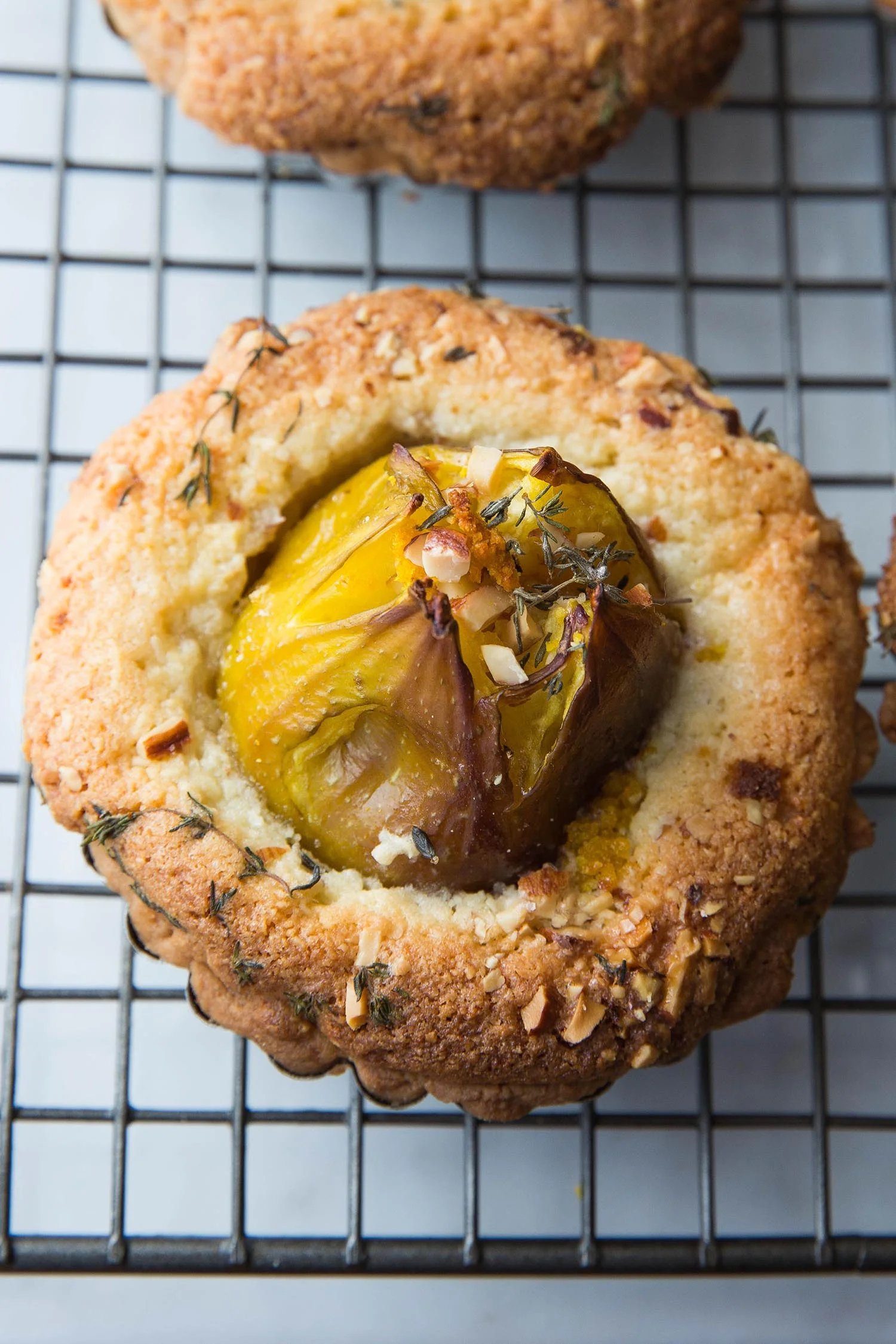
Now let's get back to my figs and how they transformed into one of the tastiest tarts I have ever baked.


serves 8

Ingredients:

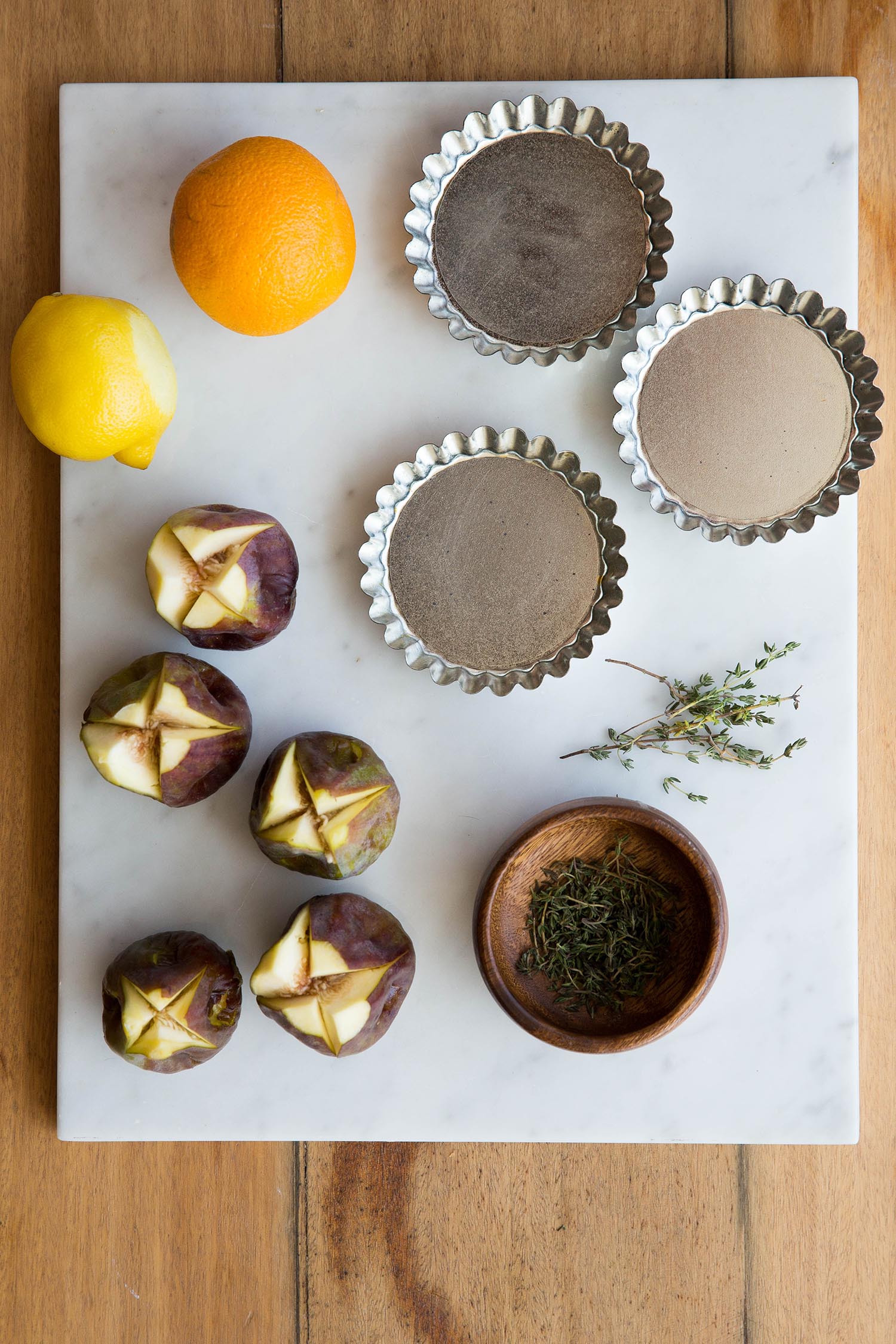
  • 15 whole figs, washed
  • 30 grams castor sugar
  • 2 tablespoons water
  • 2 sprigs of fresh thyme, leaves picked
  • Zest of one orange
  • ¼ cup raw almond

For the short crust pastry

  • 125 grams butter
  • 100 grams icing sugar
  • A pinch of salt
  • 255 grams of plain flour
  • 1 vanilla pod, scored lengthways and seeds removed
  • Zest of ½ a lemon
  • 2 large yolks, preferably organic
  • 2 tablespoons cold milk or water

For the frangipane

  • 275 grams almond flour
  • 55 grams plain flour
  • 255 grams unsalted butter
  • 255 grams castor sugar
  • 2 large eggs, lightly beaten
  • 1 vanilla pod, scored lengthways and seeds removed (you can also use vanilla paste if you have, just add a teaspoon)
  • 1 tablespoon grappa

Instructions:

You have two options when making this. Option one: you can make it in a 28cm-greased tin or options two: in individual tartlets. I chose to make individual ones.

Preheat the oven at 180 degrees Celsius.

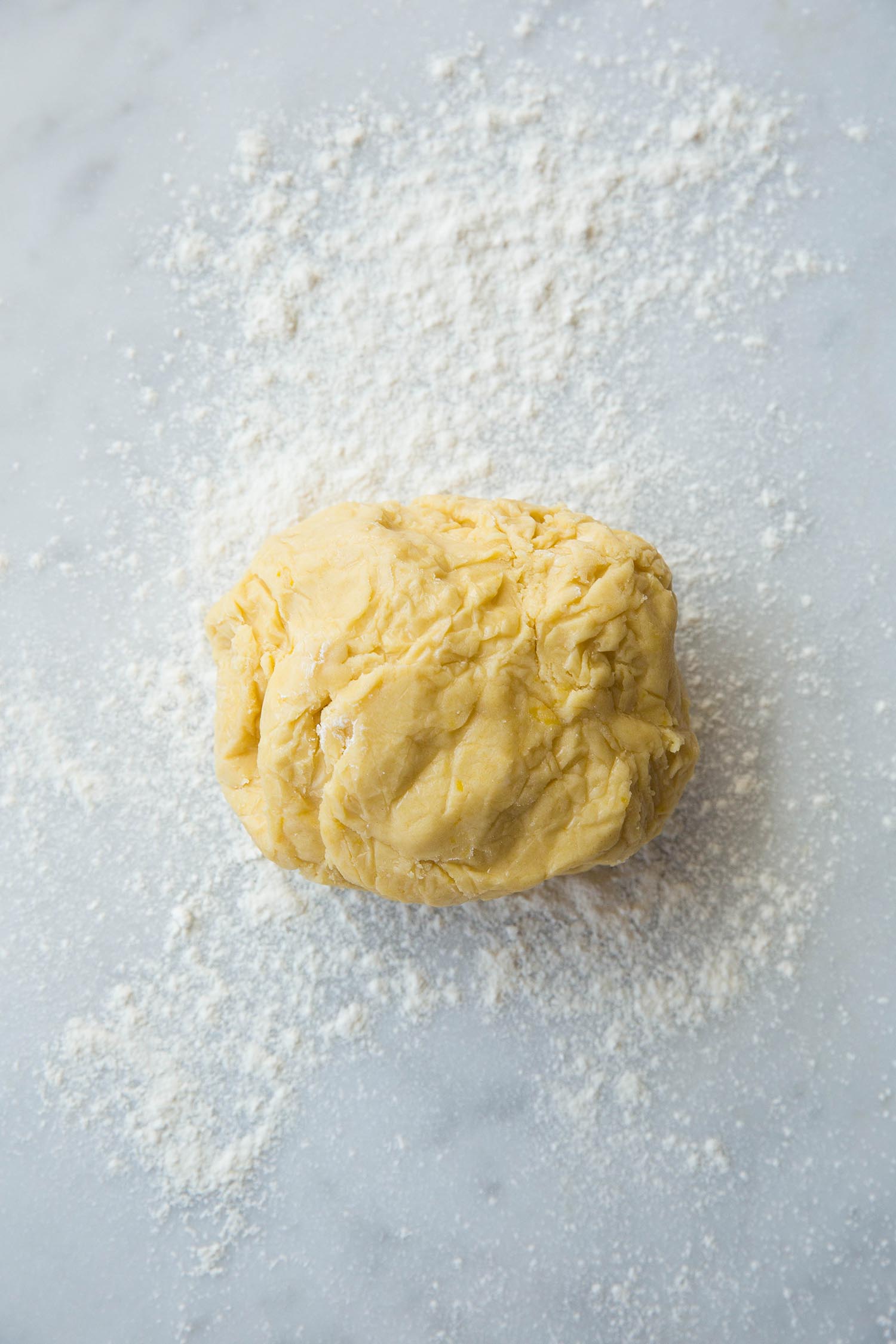
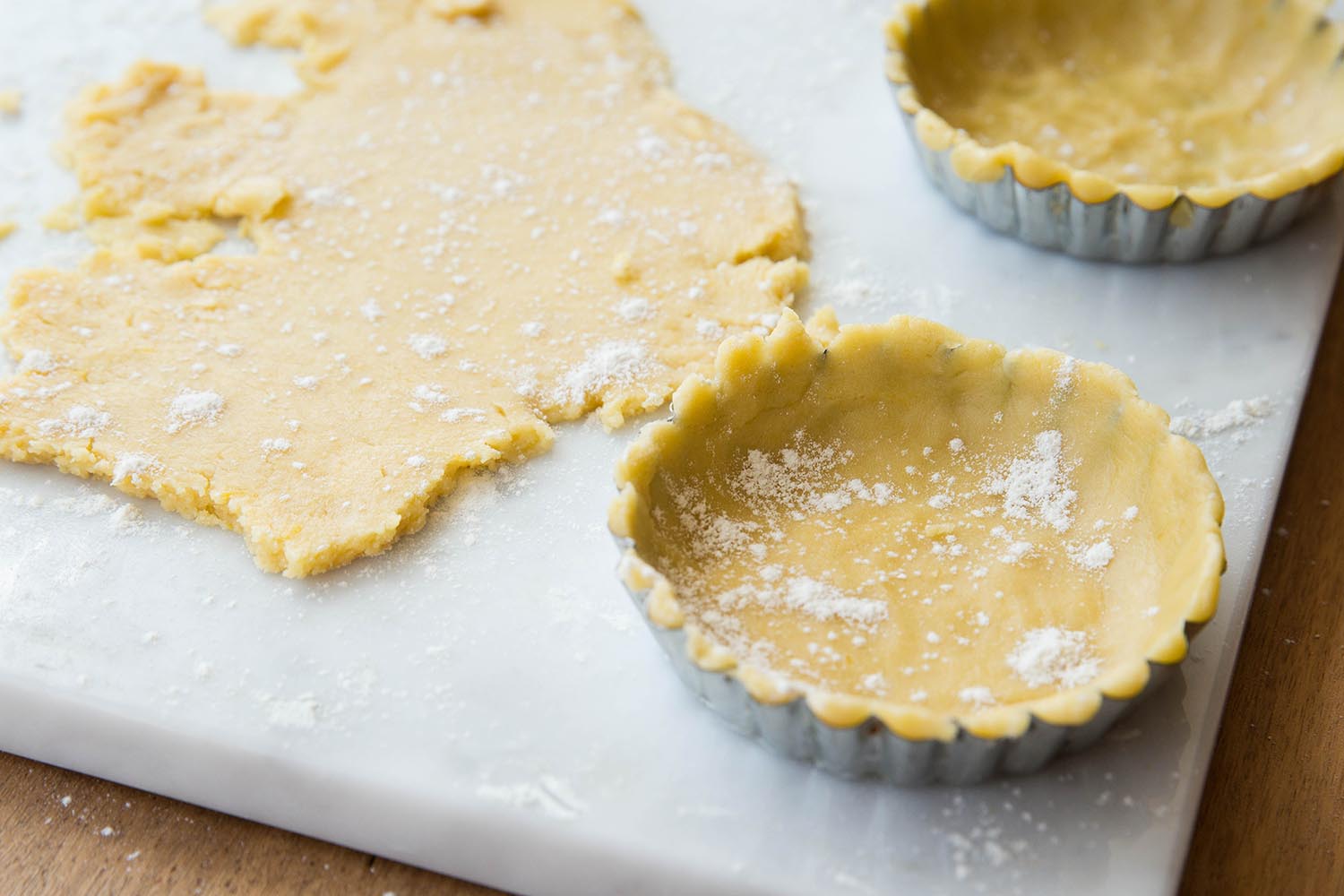
To make your pastry, cream together the butter, icing sugar and salt and rub in the flour, vanilla seeds or paste, lemon zest and eggs yolks – you can do this all by hand or you can do it in a food processor.  When the mixture looks like coarse bread crumbs you can add the milk or water. Pat and gently work the mixture together until you have a ball of dough, then flour it lightly. Do not over work the pastry or it will become chewy instead of flaky. Wrap in cling film and let it rest in the fridge for at least an hour. Remove it from the fridge, roll it out and line your tart tins or tin. Place in the freezer for an hour.

Remove from freezer and bake the pastry for 12 minutes or until golden brown.

Remove from the oven and turn it down to 170 degrees Celsius.

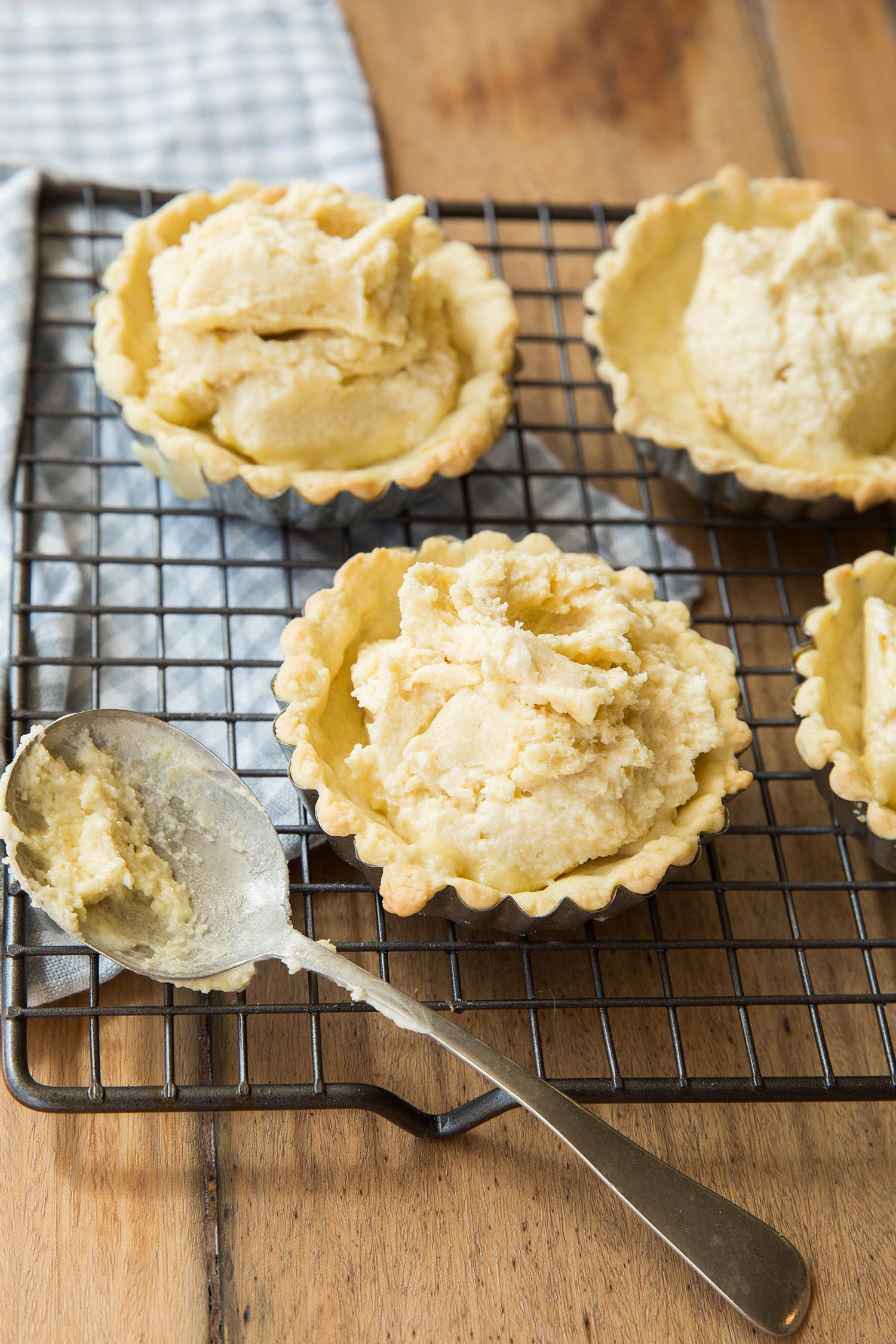
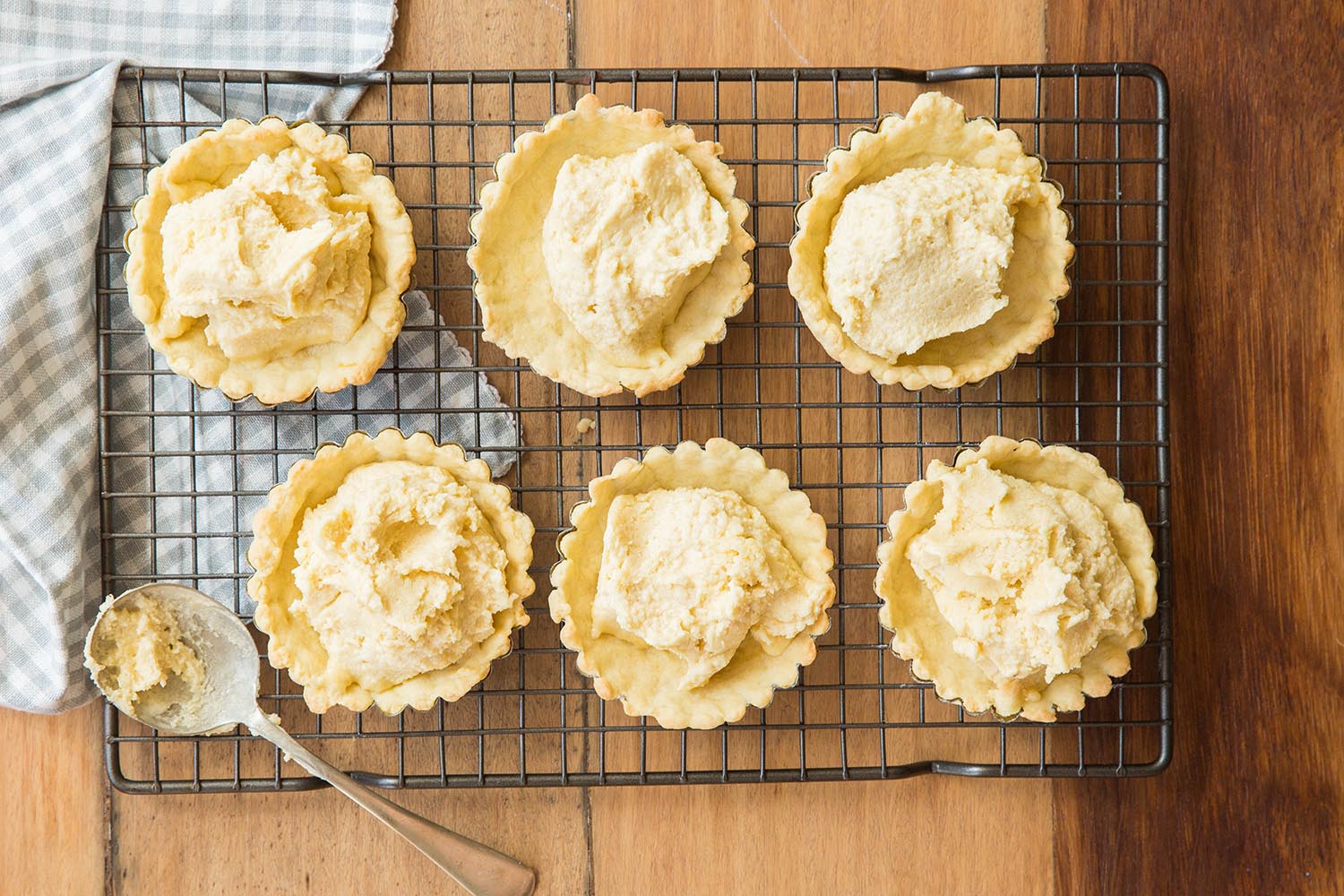
To make the frangipane, beat together your sugar and butter until light and creamy. Add your almond flour, lightly beaten eggs, vanilla and grappa. Beat until the mixture is smooth.  Place the mixture in the fridge for at least a half hour or until mixture is firm. 

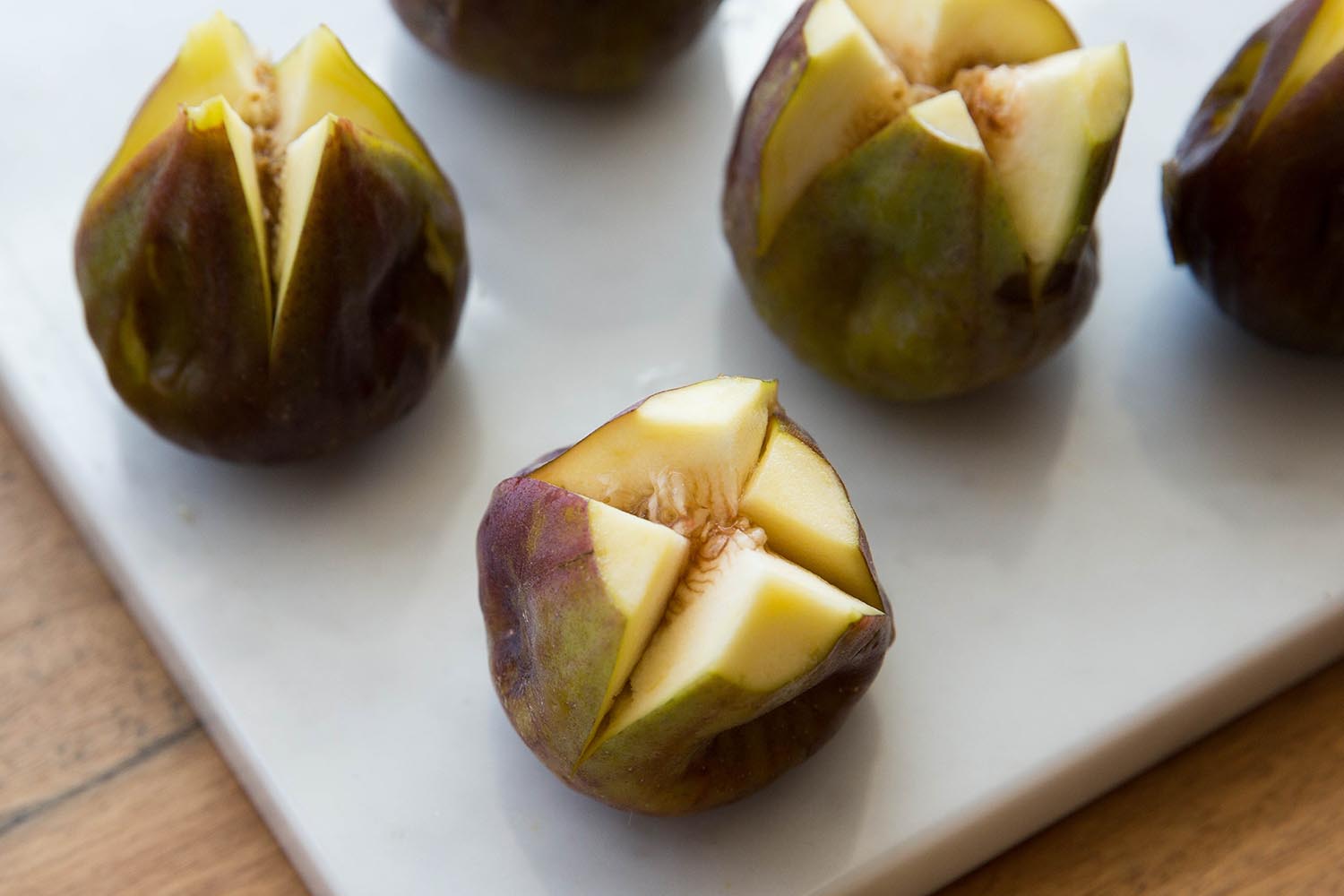
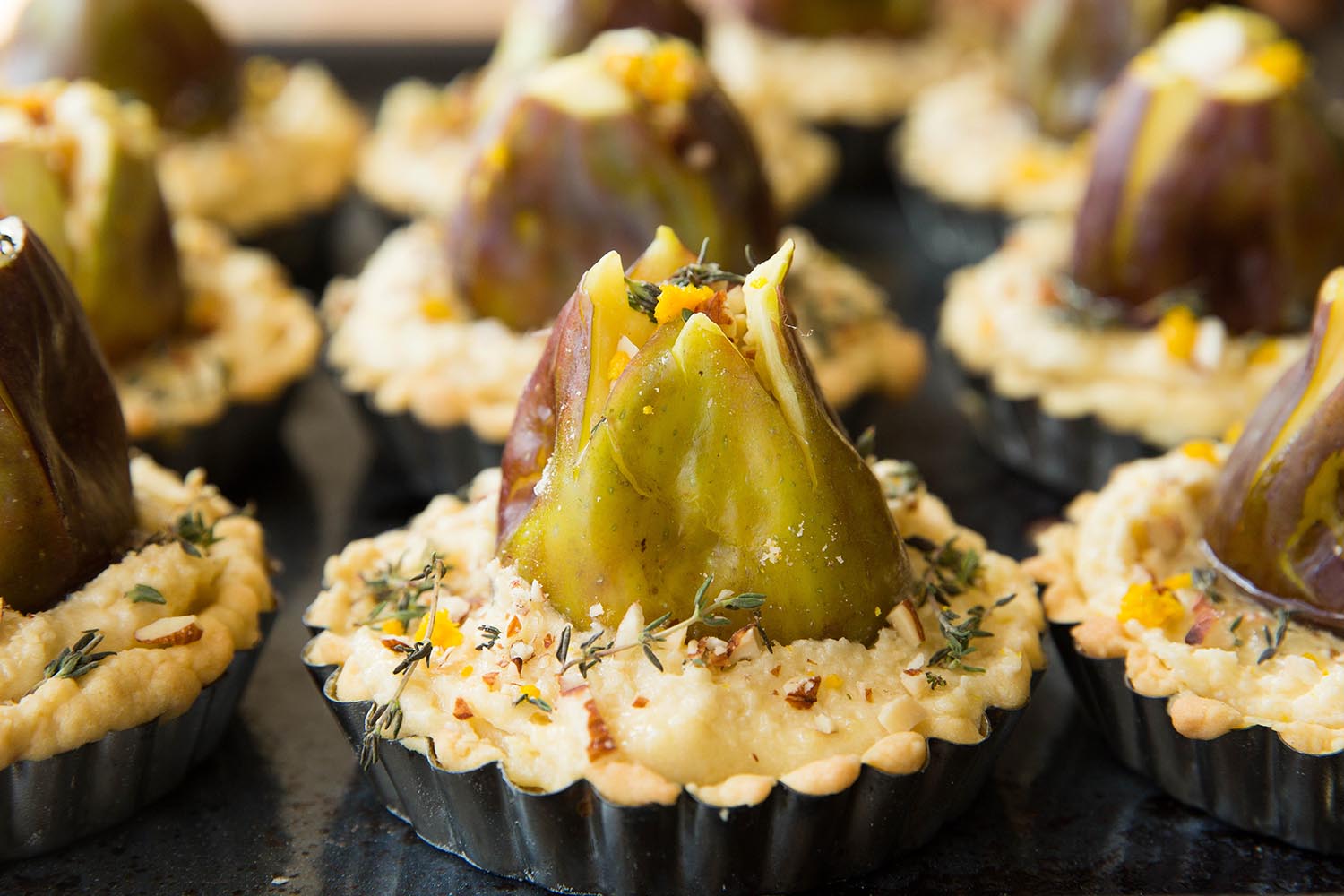
Remove the stems from the figs. Score them at the top in a cross shape. Using your thumbs push up from the base opening the figs slightly.

Spoon the chilled frangipane mixture into the pastry cases or into the large tart tin, then lightly push the figs into the frangipane with the scored side up. Heat the sugar with the water and drizzle the syrup over the figs. Roughly chop the almonds and sprinkle over the top with the thyme leaves and orange zest.

Bake in the preheated oven for about 40 minutes if you are doing the single big tart and 30 – 35 minutes for the individuals, or until the frangipane mixture has become firm and golden on the outside but still soft in the middle.

Allow cooling for about 30 – 40 minutes.

Serve with a dollop of mascarpone and a sprinkle of cinnamon.

-Melissa

caramelised onion, olive and rosemary focaccia

0L8A0370.jpg
0L8A0162.jpg

Everybody loves a carb. You can say what you like but anything to do with fresh bread is more often than not, salivated over. Not to say I am not for a healthy option on my day-to-day eating, as difficult as it can be but this focaccia takes carb loving to another dimension. Get your running shoes ready because when this focaccia comes out of the oven you will feel as if you are carbo-loading for a race. You won't just have one bite. It will turn your kitchen into a delicious smelling bakery that will leave you waiting anxiously peeping into the oven to see when it is done. Luckily the bake time isn't too bad and once it is out, you will have the ultimate focaccia, to not only eat as is but to transform into any delicious sandwich after.  


serves: 8-10

ingredients:

  • 5ml sugar
  • 125ml tepid water
  • 10g dry yeast
  • 150ml boiling water
  • 10ml sugar
  • 15ml salt
  • 60ml olive oil
  • 150ml cold water
  • 750g cake flour
  • caramelised onions

Topping:

  • rosemary sprigs
  • pitted kalamata olives
  • 3 large red onions, sliced
  • large knob of butter
  • 2 cups balsamic vinegar
  • ¼ cup brown sugar
  • 3 sprigs rosemary

Instructions for caramelised onions:

Melt the butter in a medium-sized saucepan and sauté onions until translucent. 

Add the vinegar, sugar and rosemary sprigs and cook on medium heat until vinegar has been reduced and onions are soft

Spice additions:

Thyme, mustard seeds, chilli flakes

Red wine can be substituted for the balsamic vinegar for a different flavour.

Instructions for bread:

Preheat oven to 230C.

Mix together 5ml sugar and tepid water. If your water is too hot it will kill your yeast. Stir in yeast and set aside to let it activate.

Combine 150ml-boiling water with 10ml sugar, salt and oil in a jug.

Add 150ml cold water and combine with yeast mixture.

Sift the flour into a large bowl, make a well in the center and tip in the yeast mixture. Mix to a soft dough adding extra liquid or flour as needed.

Tip dough onto a flour surface and cover with an upturned bowl and allow to relax for 5mins.

Knead thoroughly until smooth, elastic and no longer sticky at least 10mins. if you are using an electric mixer with a dough hook, put it on a medium speed for 10 minutes. 

Turn into an oiled bowl cover with a tea towel and set in a warm place to double its bulk. If you don't have a sunny window let it stand next to a warm oven. 

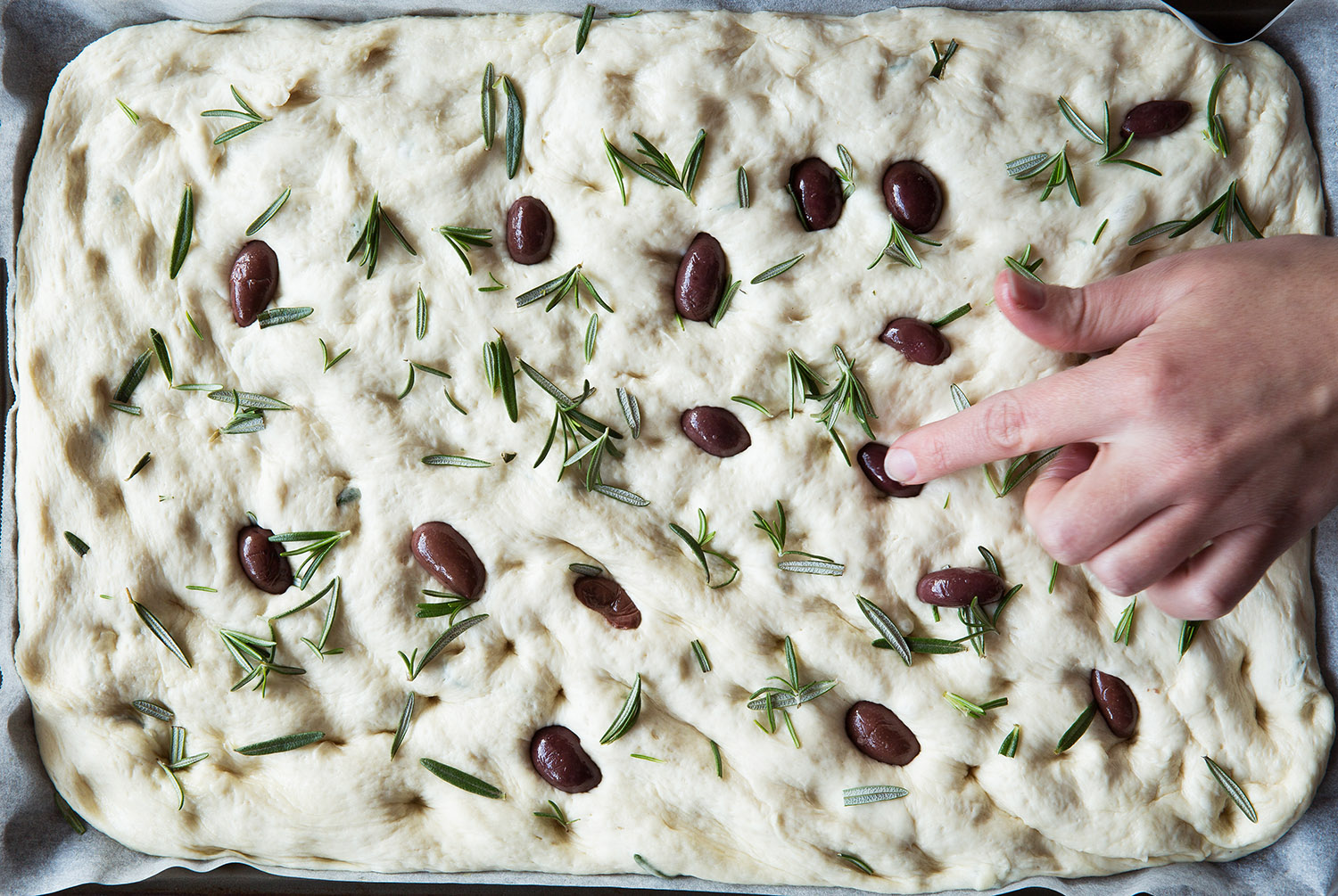
Roll out the dough and place on an oiled baking sheet.  Press firmly over the surface of the bed forming indentations. Allow bread to double in size once more.

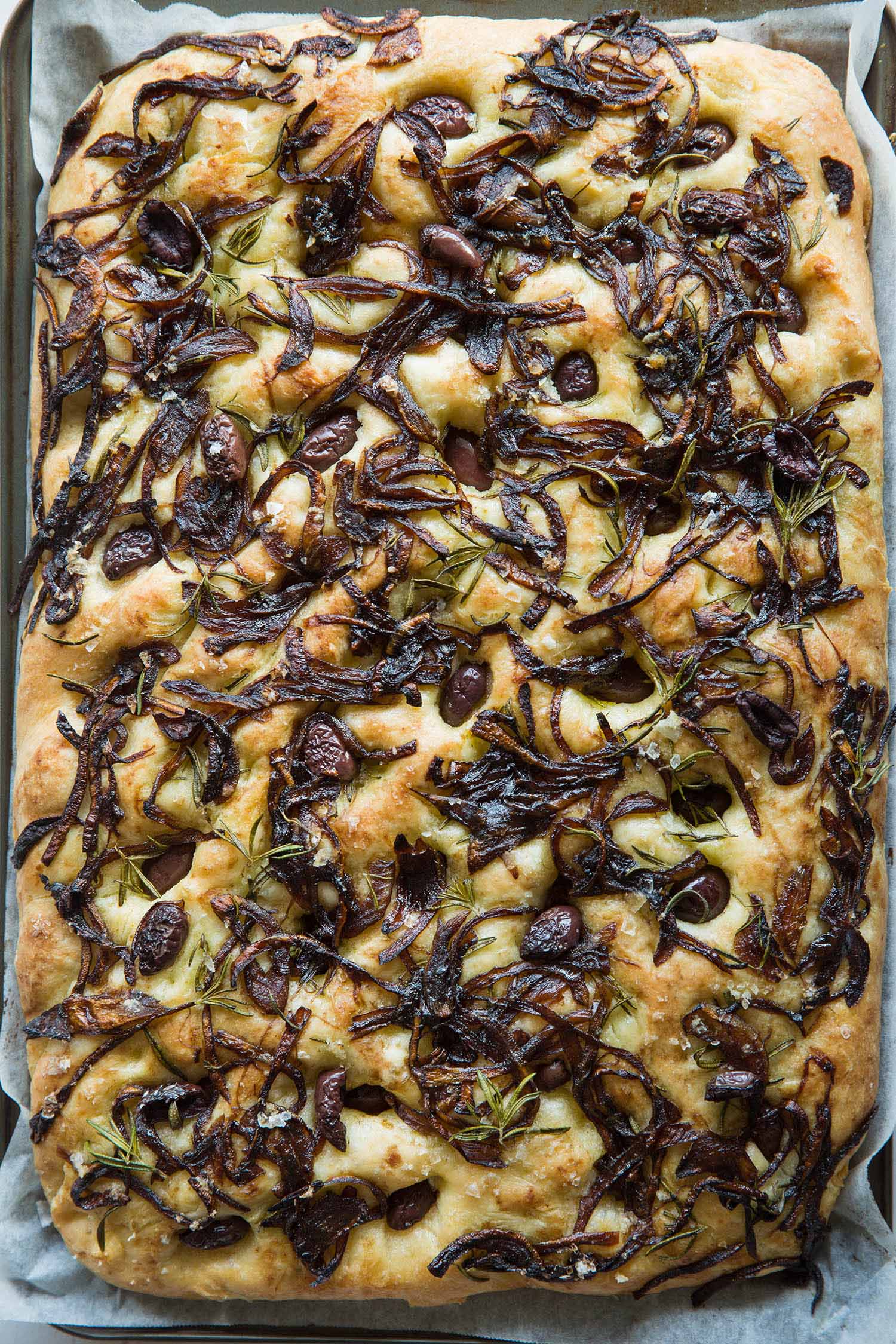
Brush the surface heavily with olive oil, spread caramelised onions evenly over, as well as olives and rosemary. Season with sea salt flakes.

Put in the oven and immediately reduce temperature to 200C.

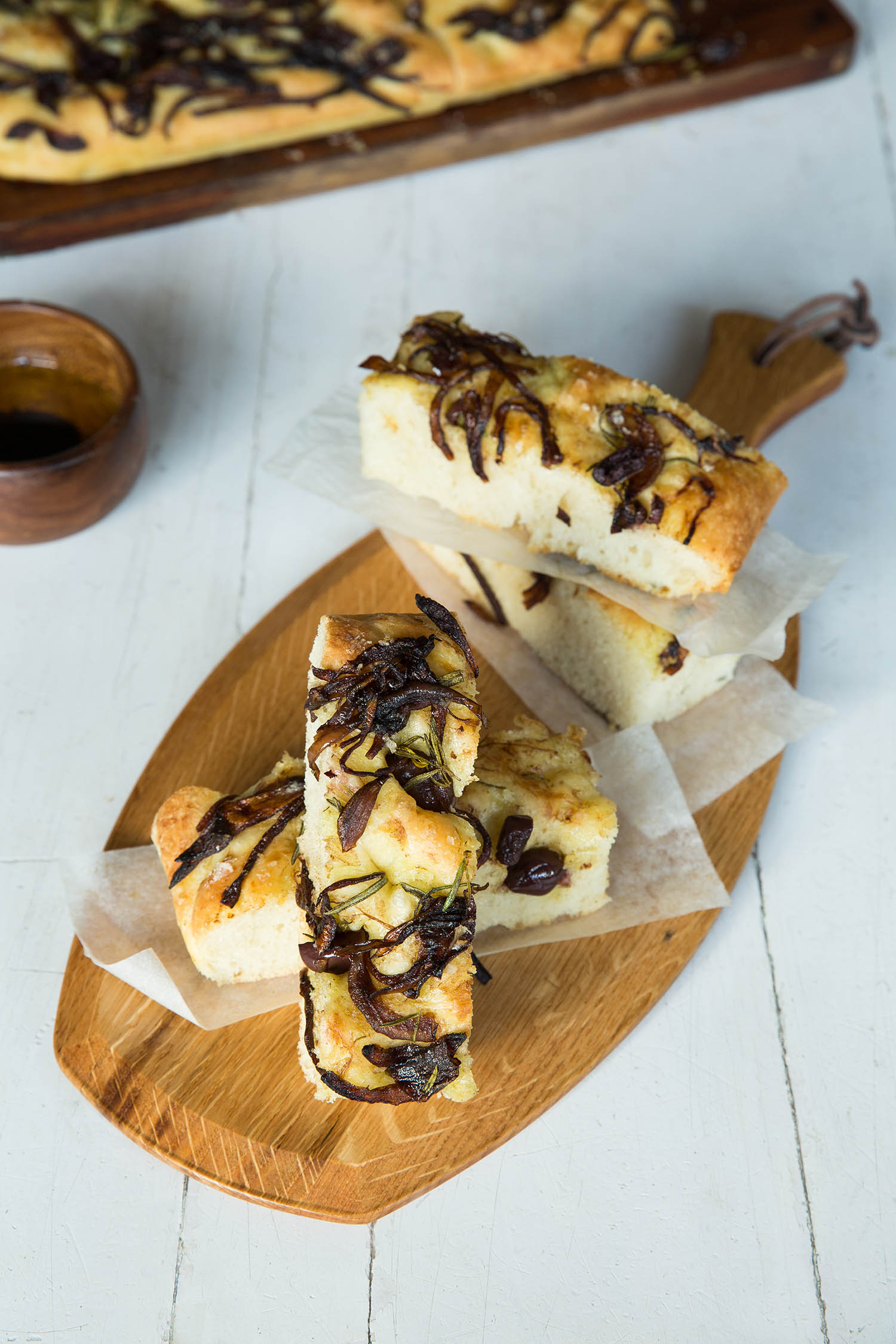
Bake for 15 minutes or until golden once cooled slice into soldiers. Serve with balsamic and olive oil for dunking!

-Melissa


Easter Ring - A Legacy of Flour and Tradition

There is something truly sacred about growing up in a family that honours tradition. I count myself incredibly lucky to have a mother who, no matter how busy life became, always carved out time for the little moments—the kind of moments I will now cherish forever.

Whether it was the scent of spices on Easter morning or the ritual of decorating our Christmas tree, I grew up at her knee. She taught me not just how to bake, but how to become the woman I am today. She is my best friend, my rock, and a true connoisseur of flavours. In many ways, she is the birthplace of The Truffle Journal and my entire culinary life, unless, of course, I look even further back to my grandmother.

Tradition is a value I hold dear and one I am so hopeful to share with you. Those magical mornings spent baking Easter rings or setting up the Osterzweig (a beautiful German tradition of hanging eggs on branches) are etched into my memory.

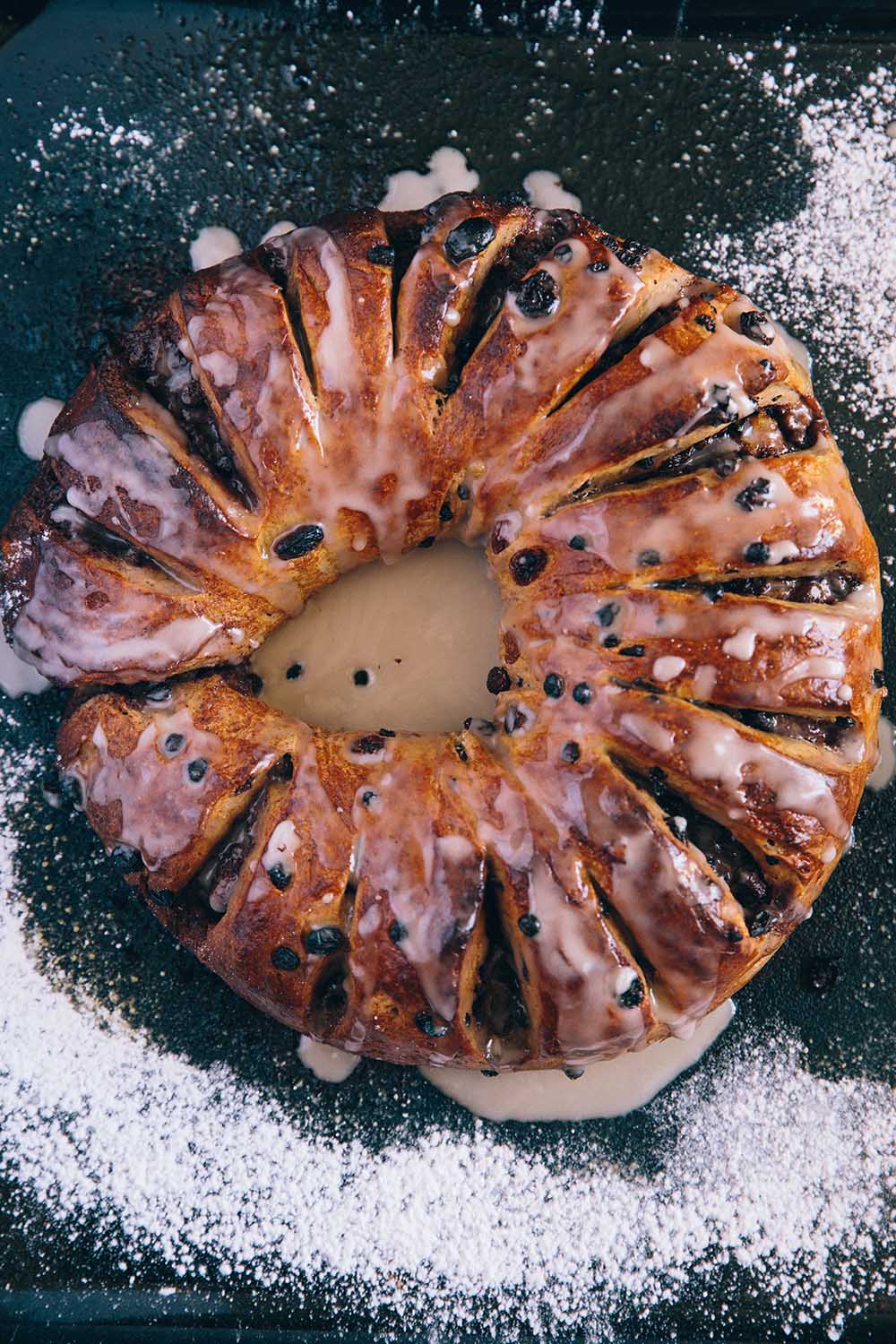
I hope that by trying this recipe and sharing it around a table with your loved ones, you feel inspired to create your own yearly rituals. This Easter Ring is essentially a "glorified" hot cross bun meets a cinnamon roll, a total game-changer for your holiday table.


Serves: 8

Ingredients

The Dough 500g flour, sifted
5ml salt
55g sugar
10ml ground mixed spice
10ml ground nutmeg
5ml ground cinnamon
10g instant dry yeast
60g butter
150ml milk
1 egg, beaten
125ml lukewarm water
150g cake fruit mix

The Filling
80g butter
60g castor sugar
30ml cinnamon
180g cake fruit mix
1 egg
12.5ml milk

The Icing
85g icing sugar, sifted
15ml water (or brandy, for a festive kick)
5ml vanilla essence


The Process

In a mixing bowl, combine the first six dry ingredients. Once combined, sprinkle the dry yeast over the top.

In a small saucepan, melt the butter into the milk. Once melted, set it aside to cool slightly.

Combine the dry ingredients and the fruit mix with the egg and the milk-butter mixture. Slowly add enough lukewarm water until it forms a soft, pliable dough.

You can use a stand mixer with a dough hook for this part. Knead for 10 minutes until the dough is smooth and elastic. It should not be too sticky; if it is, add a tiny bit of flour until the dough feels balanced.

Lightly flour your counter and place the dough on the surface, covering it with a greased glass mixing bowl.

Allow the dough to rest in a warm environment for 20 minutes. I often leave my oven on low to warm the kitchen or place the dough in a sunny spot.

Once rested, roll the dough out into a rectangle roughly 35cm by 25cm. Be sure to flour your surface so it doesn't stick.

For the filling, cream the butter and sugar together in a small bowl. Spread this mixture all over the rectangle as if you are buttering toast.

Sprinkle the cinnamon over the butter and top evenly with the fruit mix.

Starting at the long side, tightly roll the rectangle up like a Swiss roll.

Place the roll onto a lightly greased baking tray and shape it into a ring, joining the ends.

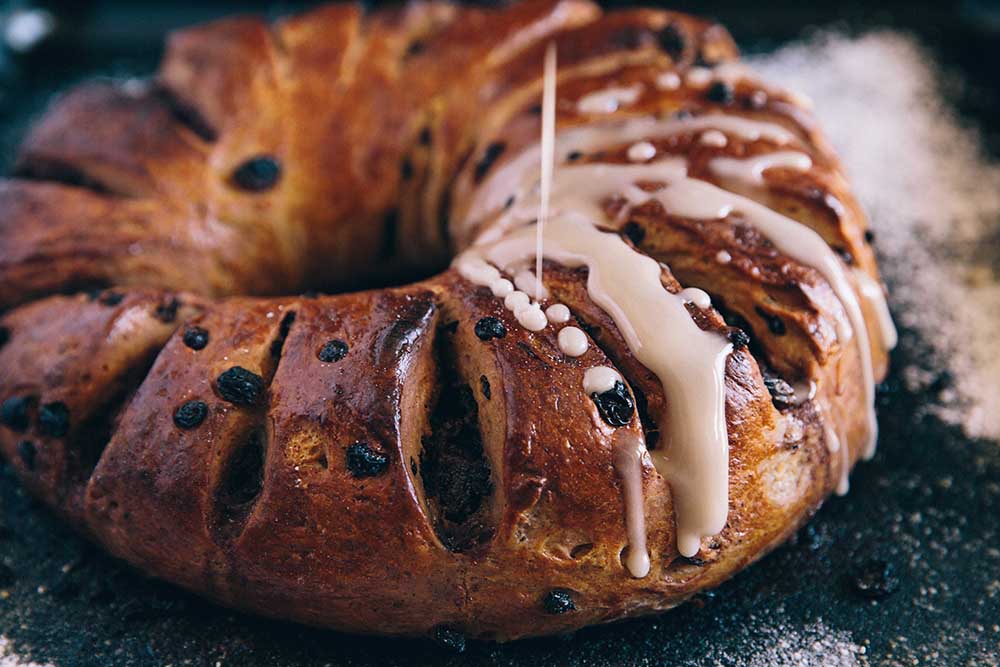
Score the ring into 5cm slices using a sharp knife, keeping the slices joined near the inner circle.

Cover with greased cling wrap and leave in a warm place for a further 10 minutes, or until the ring has doubled in size.

In a small jug, mix the egg and milk to create a wash. Brush this gently over the ring after it has risen.

Bake at 200°C for 20–25 minutes until the ring is golden brown. If you tap the base and it sounds hollow, it is ready.

Allow the ring to cool completely.

For the icing, mix the icing sugar with the water (or brandy) and vanilla until perfectly smooth and free of lumps.

Drizzle the icing over the cooled ring. When it comes to this part, I always say: don’t be shy!

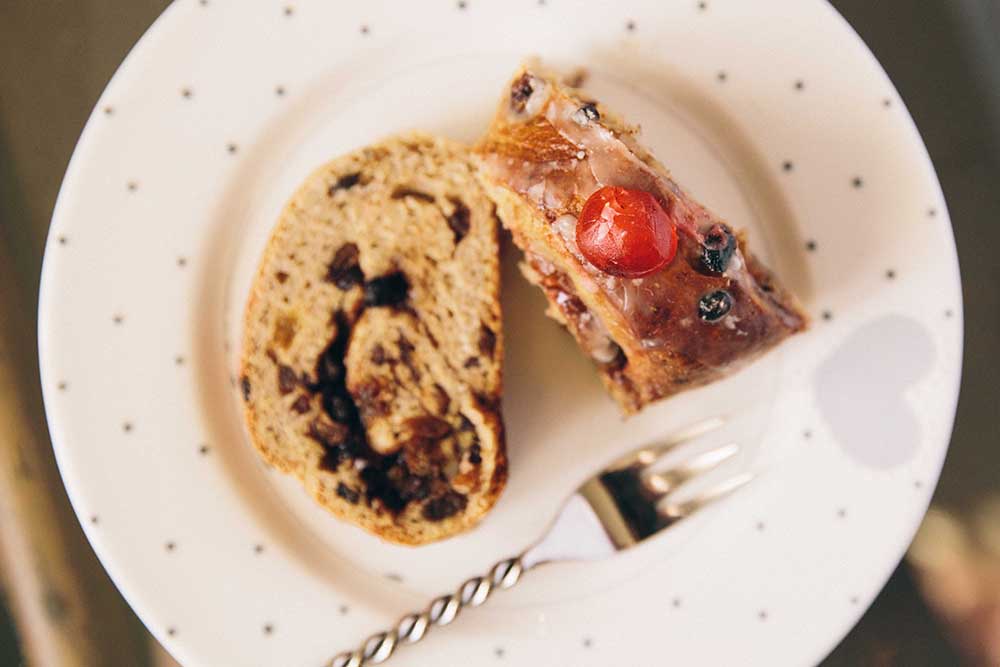
You can decorate the finished ring with glacé cherries if you wish.

-Melissa


irish soda bread

For as long as I can remember I have loved cooking shows. I remember sitting in front of the television mesmerized as a child and loving how each little bowl in front of the chef had the right amount in it for the recipe. It always looked so organized and perfect. I used to scribble down the notes, run to the kitchen put all the right amounts into a bowl, making sure everything was perfect and then pretending I had a cooking show. Then cooking or baking away. Never mind that every single bowl in the house was dirty after a simple chocolate cake.

Over the years its been a constant to sit down and enjoy a great cooking show. Picking up tips and tricks as well as great recipes. Trying them out and then adapting them to become my own.

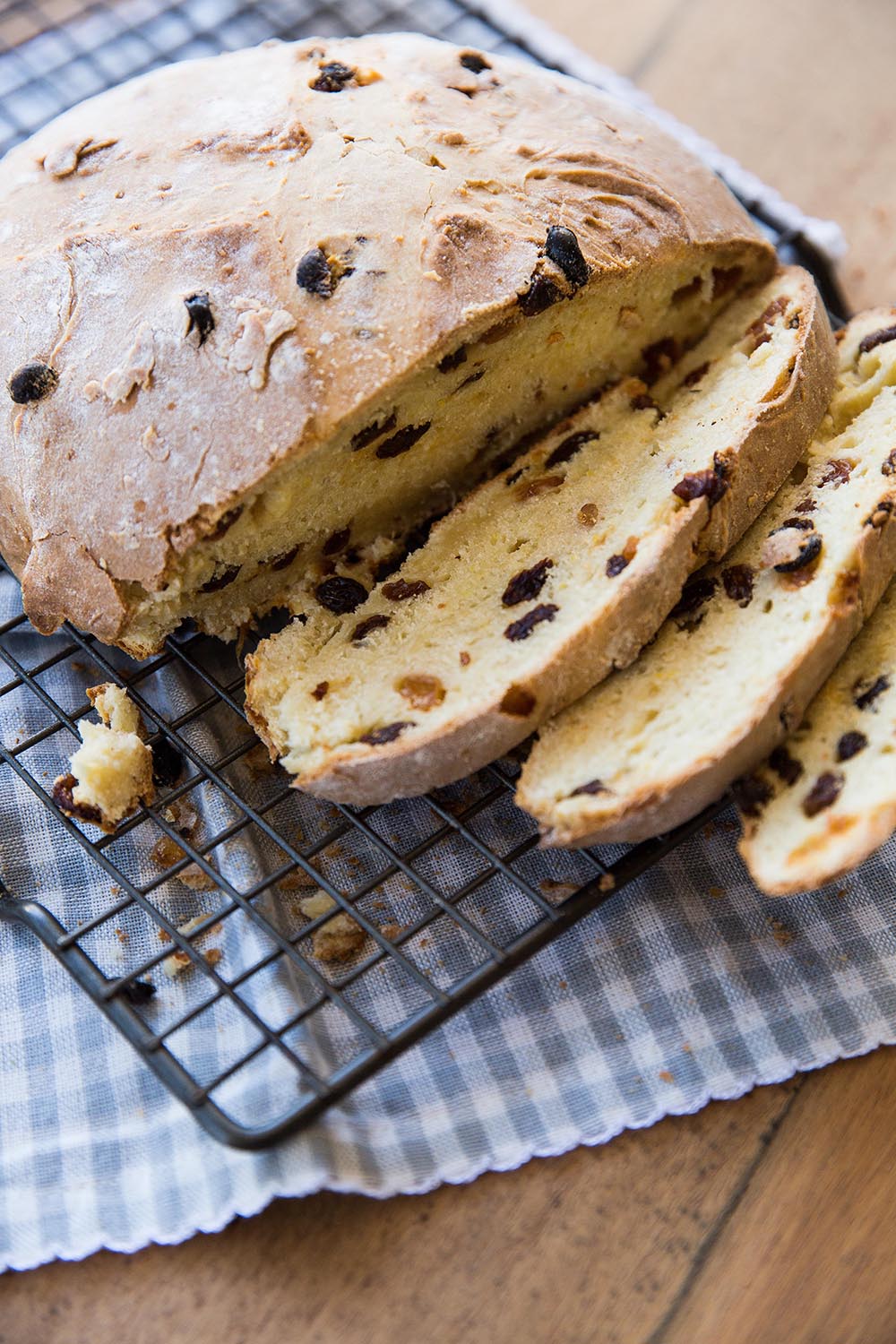
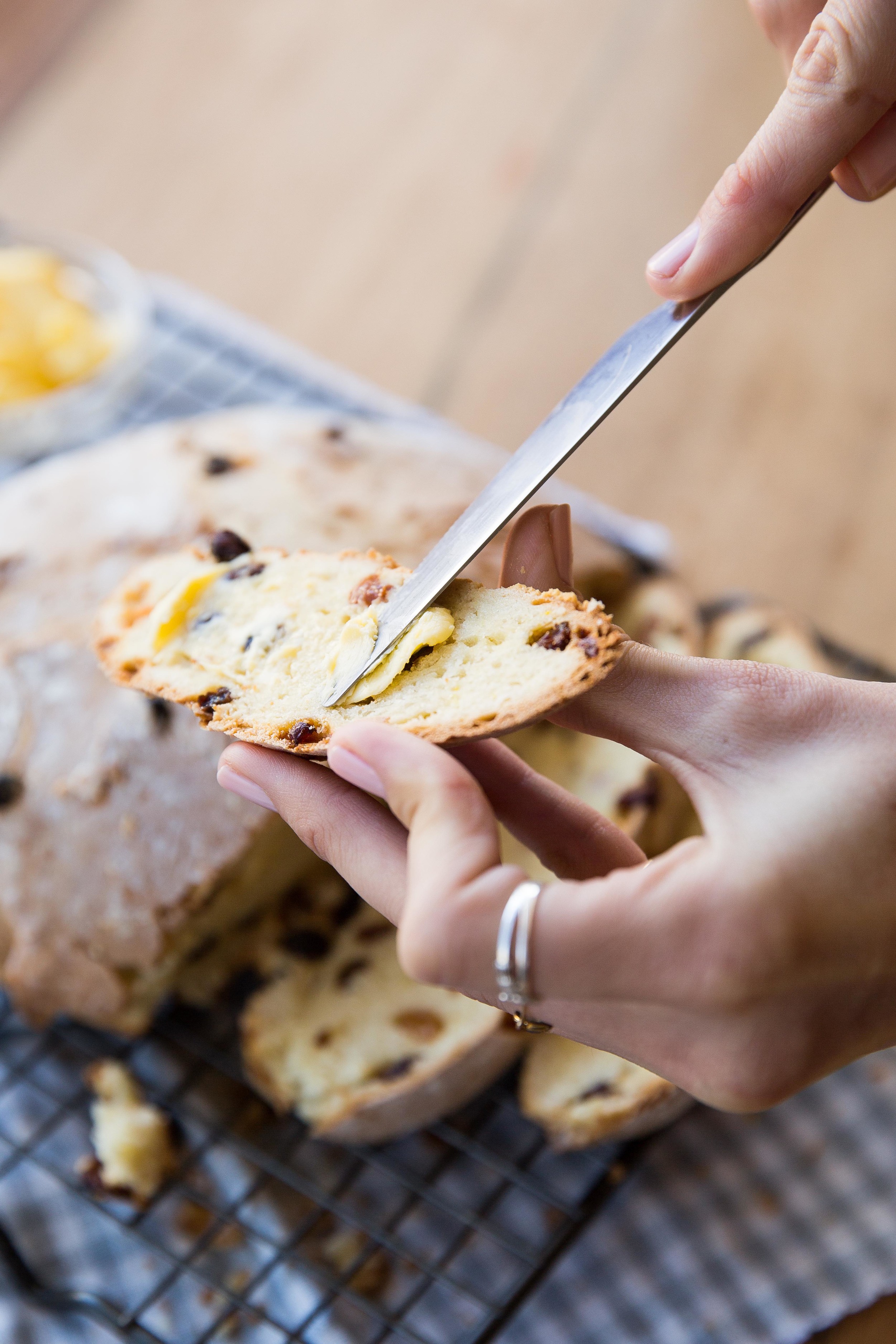
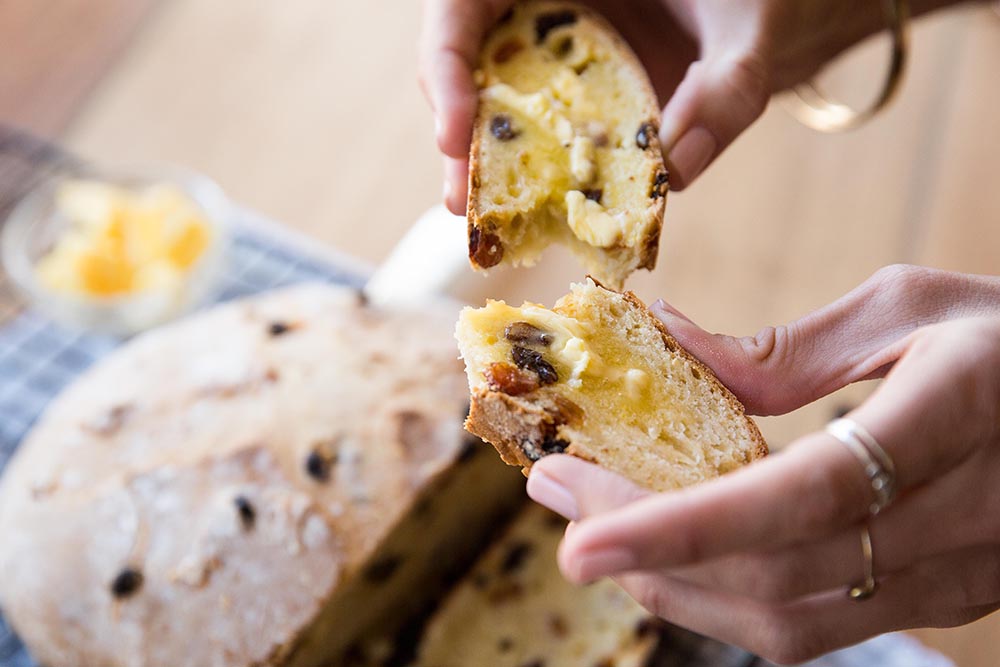
This recipe is one of those. I was watching the Barefoot Contessa and simply loved the sound of this bread as it requires no kneading and is very little fuss, yet it is delicious and very more some bread. So true to my childhood I jotted it down and rushed into the kitchen. The only thing that has changed is that I use less bowls now!


serves: 6

ingredients: 

  • 4 cups of flour
  • 1/4 cup sugar
  • 2 tsp salt
  • 1 tsp baking soda
  • 55g butter
  • 1 3/4 buttermilk
  • 1 egg
  • 2 tsp orange zest
  • 1 cup dried raisins

Instructions:

Preheat your oven at 190°c

Grease a flat baking tray and leave aside ready for dough.

Sieve the dry ingredients into your mixing bowl.

Add the butter and mix when electronic mixer using the whisk attachment. Once the better is the size of peas, stop mixing.

Add your orange zest and wet ingredients and mix using your dough hook. Don’t over mix the dough.

Once everything is mixed add the cup of raisins and beat again. Don’t ever beat. Stop when the raisins are evenly mixed into the dough.

The dough will be a very wet dough.

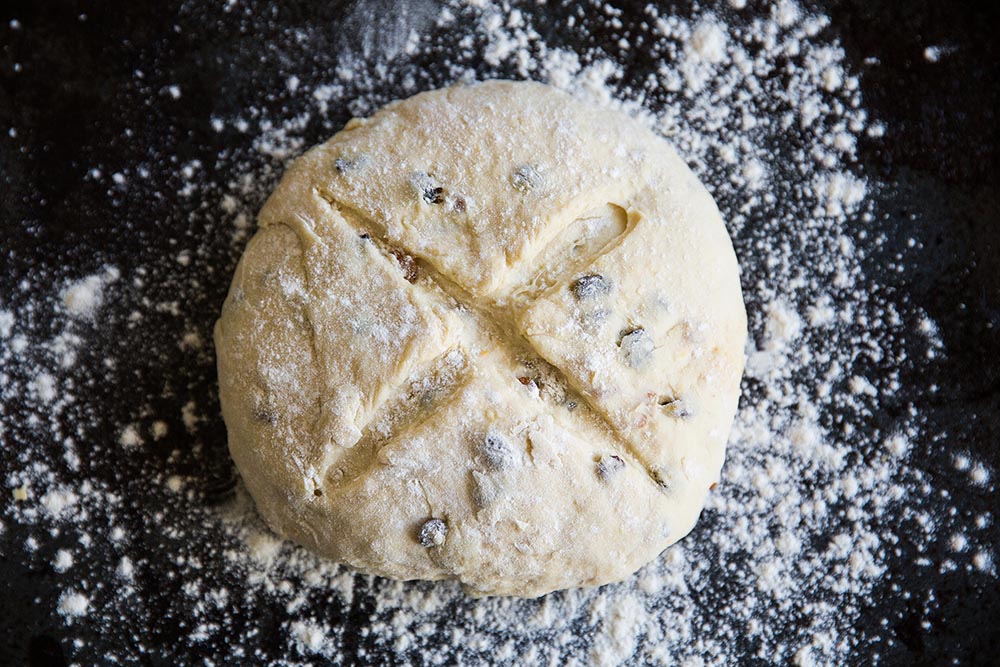
Empty the dough out onto a lightly floured surface and pull in together, the flip it over so that you are left with a neat round ball.

Take a sharp knife and make a cross on top of the dough.

Place the dough on the baking tray.

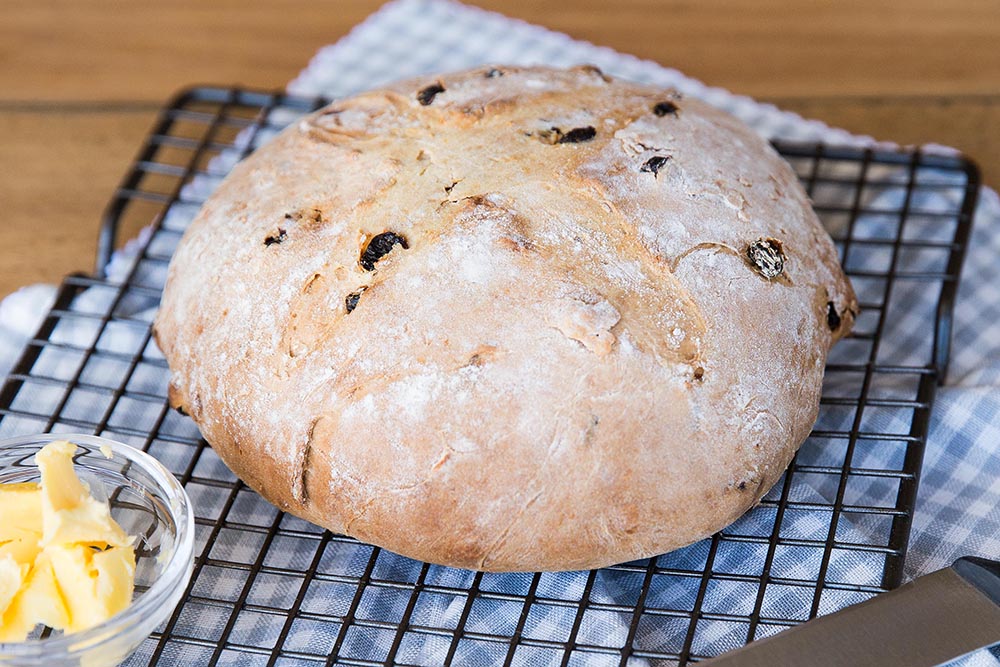
Bake for 45-55 minutes or until you tap the top of the bread and it sounds hallow.