plant based

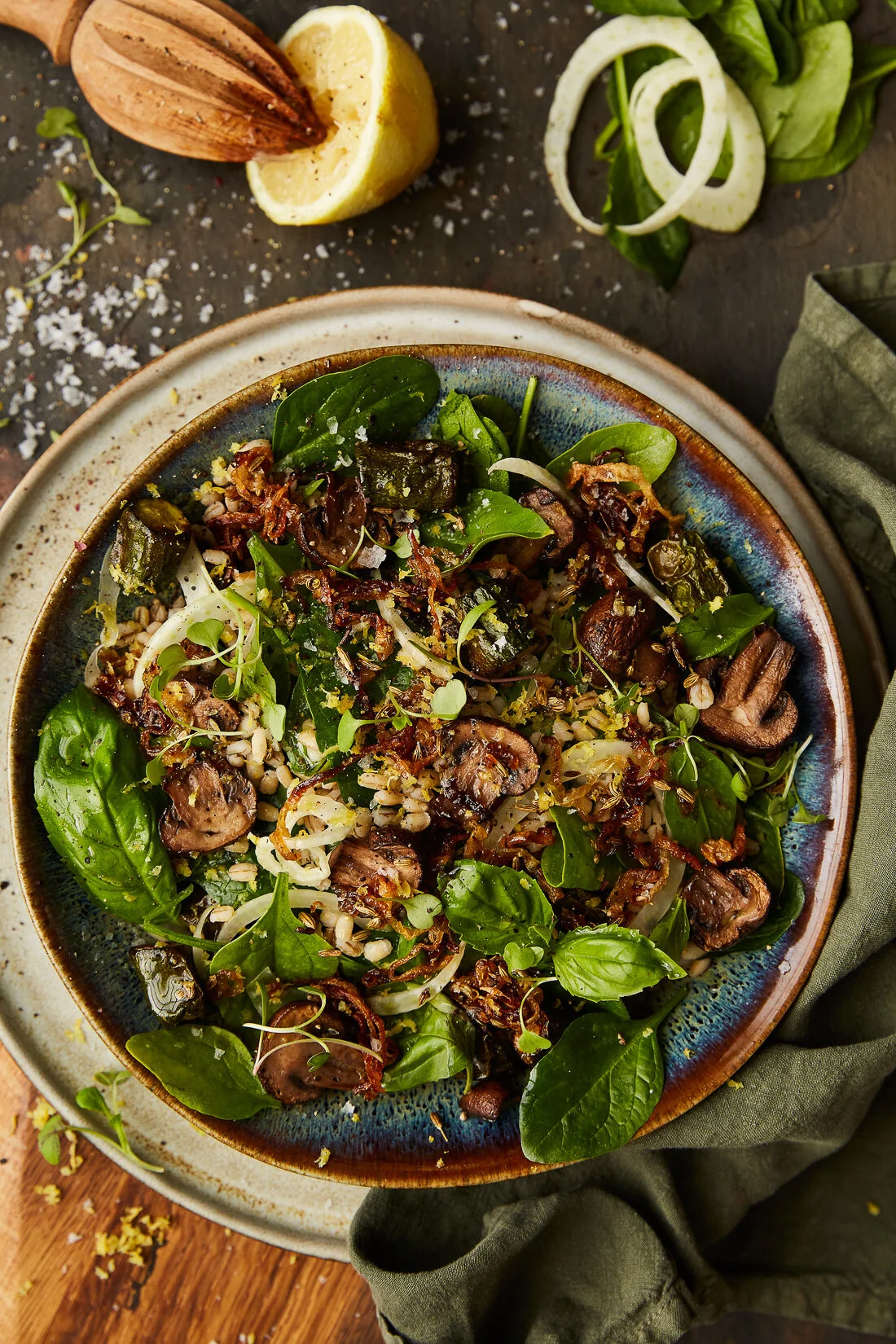
Mushroom and fennel salad

Mushroom and fennel salad

There is a specific kind of silence found in the deep woods. It is a quiet that isn’t empty, but rather vibrating with the hidden work of the mycelium beneath our feet. When we step into a forest, we aren’t visiting a gallery; we are returning to our original home.

In our fast-paced, digital world, we often suffer from a “disconnection of the senses.” We forget that our skin, our breath, and our very cells are woven from the same elements as the soil and the trees. One of the most radical acts of self-love we can perform is to re-establish that connection through the food we eat.

Food is our most direct physical link to the Earth. When we eat, we are literally taking the planet into our bodies. This realization carries a beautiful weight: to look after our food system is to look after ourselves. To protect the soil is to protect our own vitality.

This salad was designed to taste like a morning trek through the undergrowth.

  • Mushrooms: These are the messengers of the earth. When roasted, they take on an umami depth that mirrors the scent of damp leaves and ancient bark.

  • Fennel: With its bright, anise-like clarity, fennel represents the sunlight breaking through the canopy.

  • Pearl Barley: These chewy, ancient grains provide the “ground.” They are sturdy, resilient, and deeply satisfying, offering a textural reminder of the earth’s strength.

When we choose ingredients that are grown with respect for the planet, we aren’t just making a culinary choice; we are casting a vote for a future where we remain a part of the wild, not separate from it.

"Knowing that you love the earth changes you, activates you to defend and protect and celebrate. But when you feel that the earth loves you in return, that relationship transforms from a one-way street into a sacred bond." - Robin Wall Kimmerer (Braiding Sweetgrass)

Roasted Mushroom, Fennel, and Pearl Barley Salad

This dish is earthy, aromatic, and incredibly grounding. It’s perfect for those days when you need to feel your feet back on the earth.

Preparation time: 15 minutes

Cooking time: 45 minutes

Serves: 4

The Ingredients

500 g mixed mushrooms (cremini, shiitake, or oyster)
2 tablespoons olive oil
2 tablespoons balsamic vinegar
3 sprigs of fresh thyme
A generous pinch of sea salt and cracked black pepper.
1 cup pearl barley (rinsed)
3 cups vegetable stock
1 large fennel bulb (very thinly sliced)
2 cups baby arugula or wild greens
1/2 cup walnuts (toasted).
3 tablespoons extra virgin olive oil
1 tablespoon lemon juice
1 teaspoon Dijon mustard
1 teaspoon maple syrup or honey.

The Process

Place the pearl barley and vegetable stock in a medium pot. Bring to a boil, then reduce the heat to low, cover, and simmer for about 30–35 minutes. You want the barley to be tender but still have a pleasant, nutty “pop.” Drain any excess liquid and set aside to cool slightly.

Preheat your oven to 200°C. Toss the mushrooms with the olive oil, balsamic vinegar, thyme, salt, and pepper on a large baking tray. Spread them out so they have room to breathe, this ensures they roast and caramelise rather than steam. Bake for 20–25 minutes until they are golden and deeply fragrant.

While the mushrooms roast, shave your fennel bulb as thinly as possible (a mandolin works wonders here). Toss the sliced fennel with the fresh greens in a large serving bowl.

In a small jar, whisk together the olive oil, lemon juice, mustard, and maple syrup. This dressing is bright and acidic, designed to cut through the richness of the roasted mushrooms.

Add the warm pearl barley and the roasted mushrooms to the bowl of greens and fennel. Drizzle over the dressing and toss gently so the heat from the barley slightly wilts the greens. Top with the toasted walnuts for a final layer of forest-like crunch.

A Moment of Gratitude

Before your first bite, take a breath. Acknowledge the soil that grew these grains, the rain that nourished the fennel, and the intricate fungal networks that gave us the mushrooms. You are a part of this system. You are being fed by the world.
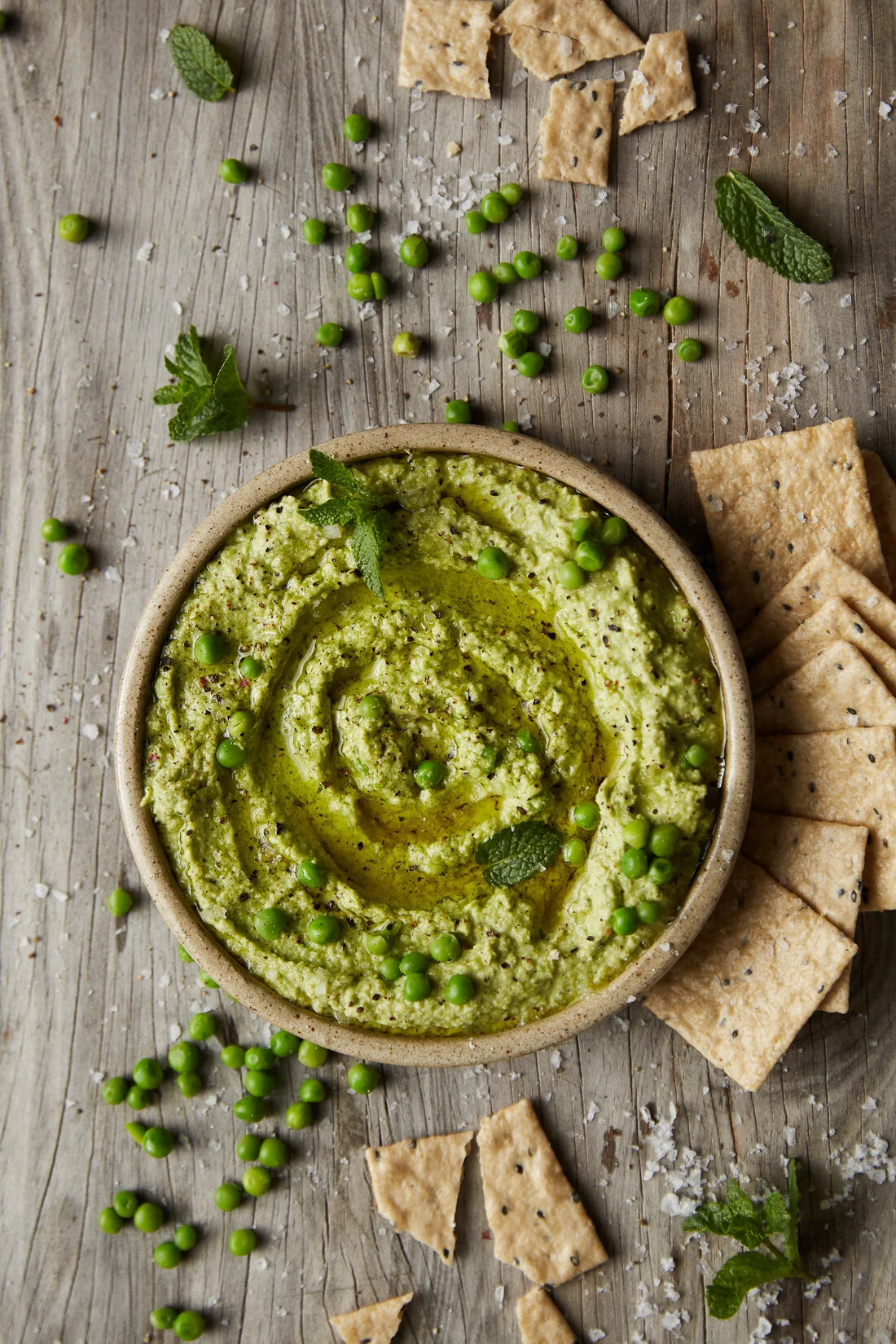
Pea and mint dip

Pea and mint dip

You only get one body—it’s with you for life, and it’s your responsibility to care for it as you would any other precious thing you own. Your body has already carried you through so much, and even if you haven’t always prioritized your health, change is always possible. You’re never too far gone, and it’s never too late to see results. Sustainable change takes time, and patience is key, but even two weeks of mindful choices—nourishing your body and cutting out harmful foods—can bring noticeable shifts in energy, mental clarity, and even weight loss.

Store-bought dips are often packed with thickeners, foaming agents, and preservatives to extend shelf life and bulk up the product. This homemade version, however, is rich in peas, which are loaded with vitamin K and folate—essential for heart health. They’re also an excellent source of vitamin C, giving your immune system a natural boost. Simple to make and packed with goodness, this dip is a delicious, nutrient-dense addition to your table.

Serves: 6

Preparation time: 5 minutes

Cooking time: 5 minutes


Ingredients:

3 cups fresh or frozen peas

zest and juice of ½ lemon

2 tablespoons tahini

1 clove garlic 

¼ cup packed fresh mint leaves

3 tablespoons olive oil 

salt and pepper 


Instructons:

If using fresh peas, skip this step. If you are using frozen peas, add them to a large bowl with boiling water, just enough to cover them. Let them blanch for about 3 minutes. Once ready, drain and add them to a bowl of ice water to stop the cooking process. Drain the water and set aside. 

Place the lemon zest and juice, tahini and garlic into a food processor or blender and blend until smooth. Add the peas, mint, olive oil and salt and pepper and blend until smooth or until you have reached your desired consistency. You can leave it a bit chunky but make sure it’s well combined.

Serve as a dip with freshly chopped vegetables or on toast with sliced tomato and black pepper. I keep this in the fridge as a go-to snack and it is great to add to your meal prep. It’s high in protein and will keep you fuller for longer!

-Melissa


Cooking from scratch, a self love revolution

Cooking from scratch is one of the most profound acts of self-care. In a world that glorifies convenience, fast fixes, and ultra-processed foods, slowing down to prepare a meal from whole, nourishing ingredients is a quiet rebellion—a way to reclaim your health, reconnect with your body, and nourish yourself deeply.

Food is more than just fuel; it is information for your body, affecting everything from your gut health to your mood, hormones, and long-term well-being. Dr. Mark Hyman, a pioneer in functional medicine, often says that food isn’t just calories; it’s medicine. The quality of what we eat determines how well our bodies function, and when we choose to cook from scratch, we take control of that quality. By selecting whole, unprocessed ingredients, we naturally eliminate the industrialized additives, preservatives, and chemicals that have infiltrated the modern diet—many of which are now linked to inflammation, metabolic disorders, and chronic disease.

Plant-based foods, particularly those high in fiber, play a significant role in hormonal balance, especially for women. Our hormones are delicate messengers, responding not just to what we eat but also to how we live. Fiber-rich vegetables, whole grains, legumes, nuts, and seeds help to regulate blood sugar levels, support gut microbiota, and assist the body in metabolizing excess hormones. While plant-based eating offers incredible benefits, it is also essential to honor bio-individuality. For some, incorporating small amounts of high-quality, ethically sourced animal products can be beneficial. The key is to listen to your body, meet yourself where you are, and prioritize nutrient density over dietary dogma.

Cooking from scratch also encourages a connection with nature and the seasons. When we step away from processed foods, we naturally lean into fresh, whole ingredients that shift throughout the year. Seasonal eating not only enhances flavor and nutrition but also aligns us with the rhythms of nature, supporting our body's natural cycles. A summer tomato, bursting with sweetness and vibrant color, is entirely different from one grown in a hothouse in the middle of winter. By choosing local, seasonal produce, we nourish ourselves in a way that is sustainable, both for our health and the planet.

Beyond physical nourishment, cooking is an act of presence. It teaches patience, creativity, and mindfulness. When we chop, stir, and season with intention, we become more attuned to our food and, in turn, to ourselves. This kind of attention allows us to develop a deeper relationship with what we eat, shifting the focus from restriction and guilt to nourishment and enjoyment. Counting chemicals instead of calories is a powerful mindset shift—one that prioritizes quality over quantity and encourages a more intuitive, balanced approach to eating.

Ultimately, disease is often a symptom, while lifestyle is the cause. The modern diet, filled with artificial ingredients and devoid of nutrients, has contributed to the rise of many preventable illnesses. But by returning to whole, real food, we give our bodies the tools they need to heal and thrive. Cooking from scratch is not about perfection or extravagance; it is about empowerment. Whether you have five minutes or fifty, whether your budget is tight or abundant, there is always a way to bring more whole foods into your life. It starts with small, intentional choices—choosing an apple over a packaged snack, making soup from scratch instead of buying a canned version, or simply taking a moment to appreciate the ingredients on your plate.

Food is a gift. When we embrace cooking as an act of self-love rather than a chore, we transform not only our health but also our relationship with nourishment itself. Eating well isn’t about restriction; it’s about abundance—the abundance of flavors, nutrients, and the deep satisfaction that comes from truly taking care of yourself. And that, more than anything, is what real wellness looks like.

Cauliflower & mushroom mince tacos

Cauliflower & mushroom mince tacos

This is a feast that creates an interactive space with food. It allows you to share what you have created and gives those who you share it with an immersive food experience by assembling their own meal. Encourage them to take a deep breath and the time to assemble a beautiful plate. We eat with our eyes first and creating a meal that is visually appealing can not only create excitement, but ultimately leads to deeper satisfaction. As always, the energy you put into your meal when cooking and assembling it is the energy which you will consume. 

Quick and easy tofu kebabs

These are a beautiful contribution to that dinner party that you’re going to, and can wow with the beautiful colours while still being minimal effort to create. Most vegetables can be used as a substitute if there’s something you don’t like so if I encourage you to explore the vast array of vegetables available at the supermarket to switch out between the tofu. Be sure to buy a firm tofu for this recipe, as you’re going to grill it and don’t want it to fall apart. Every time you make a decision to eat more vegetables, not only to you naturally crowd out junk food, but you decide to nourish your body with the wide variety of macro and micro nutrients.

Ingredients:

4 sprigs fresh rosemary leaves

1 red pepper, seeded and cut into bite-size chunks 

1 yellow pepper, seeded and cut into bite-size chunks 

300 g cherry tomatoes

2 large courgettes, cut into 2 cm chunks 

1 red onion, quartered and layers separated 

200 g firm tofu, cut into bite-size cubes 

1 teaspoon ground turmeric

1 tablespoon honey or maple syrup (100%)

1/4 teaspoon chilli flakes

2 tablespoons coconut oil, melted 

2 cloves garlic, crushed 

salt and pepper 


Instructions:

Heat a grill pan over medium heat until it is hot. Tie the rosemary sprigs together with string to make a basting brush. Set aside. You can also cook this recipe over a braai or bake it in the oven for 20 minutes at 200 °C. 

While the grill pan heats up, thread the vegetables and tofu onto skewers, alternating the different ingredients and packing the vegetables tightly together. 

Place the turmeric, honey, chilli, coconut oil and garlic into a small bowl and mix well. Place the skewers into the grill pan. Using the basting brush made with the sprigs of rosemary, dunk the brush into the oil and lightly brush the vegetables every 5 minutes until evenly coated. Cook them for 20 minutes, rotating every time you brush them.

Once the vegetables are cooked and have some grill marks on them, season with salt and pepper and serve. 

-Melissa

Quick and easy tofu kebabs